Low Maintenance Native Plants for Southwest Florida HOAs
 Chris Stephens
May 30, 2026 · 5 min read
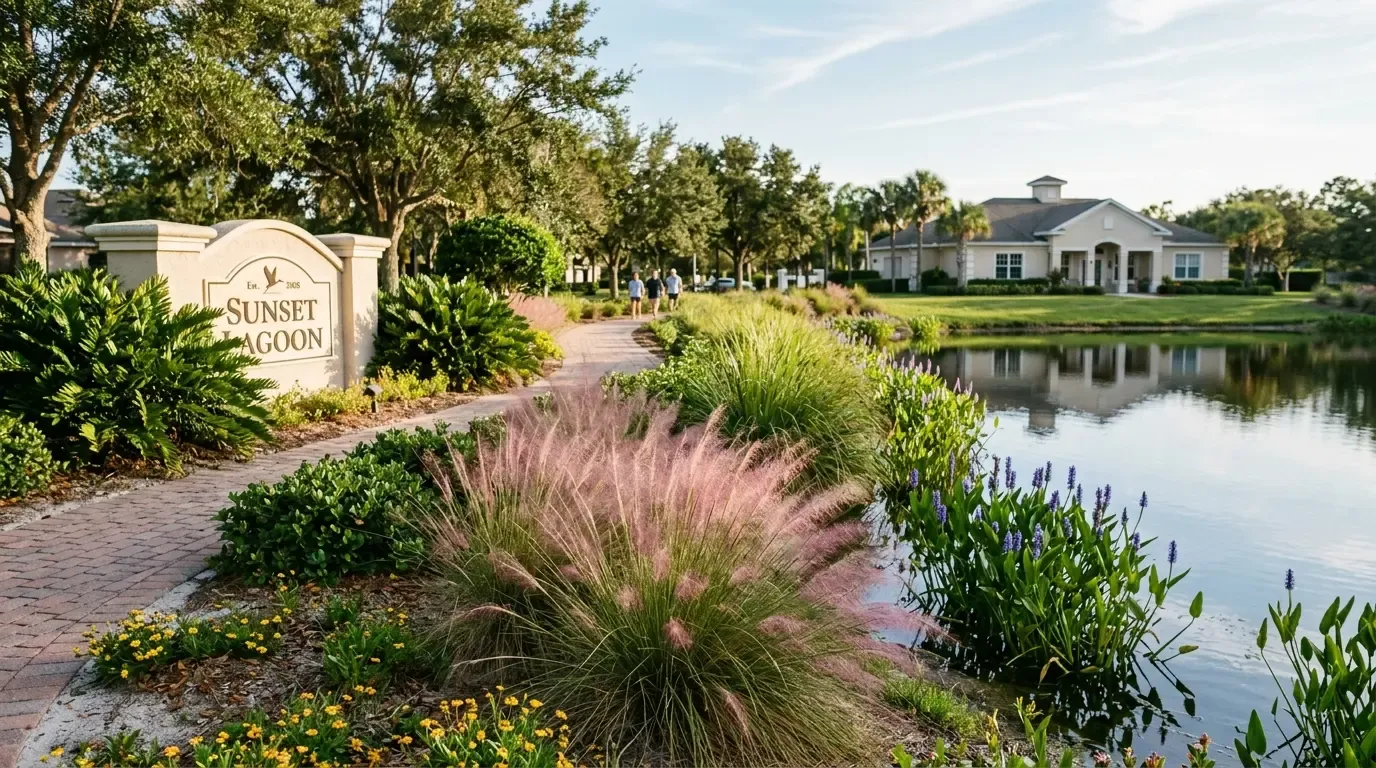
Quick Answer: The best low-maintenance native plants for Southwest Florida HOAs and common areas include Muhly Grass and Coontie for sunny/dry spots, Simpson’s Stopper and Walter’s Viburnum for dense privacy screens, and Pickerelweed for retention pond edges. Transitioning to a Florida native landscape can significantly reduce HOA irrigation costs, cut fertilizer use, and lower long-term maintenance overhead.
A neighborhood entrance in Southwest Florida has to do more than just look presentable. It has to survive weeks of dry-season heat, sudden summer downpours, reflected heat from pavement, and sandy soil that drains quickly. In many HOA (Homeowner Association) and common-area landscapes, the usual response is to keep replacing struggling plants, increasing irrigation, and pruning shrubs into shapes they do not naturally want to hold.
The University of Florida IFAS Extension estimates that up to 60% of Florida’s residential water supply is used for outdoor irrigation—much of it wasted on plants poorly suited to their environment.
Common areas need plants that can handle local SWFL conditions. Florida native plants are the practical solution because they are naturally adapted to heat, seasonal drought, heavy summer rains, and sandy soils.
Why Does Common-Area Landscaping Fail in Southwest Florida?
Common-area beds are often placed in the harshest microclimates of a neighborhood: entrance monuments, road edges, parking lot islands, clubhouse borders, and retention pond banks.
According to property management industry averages, landscaping and grounds maintenance typically consume 30% to 40% of an HOA’s total annual operating budget. When non-native plants are poorly matched to harsh conditions, maintenance becomes reactive and highly expensive. Crews trim too often, replace dead plants, treat pest problems, and constantly correct irrigation issues.
The goal of HOA landscaping shouldn’t be a “wild” common area that residents don’t understand; the goal is a landscape that looks planned, aesthetically pleasing, and lowers overhead because the right plant is in the right place.
Best Native Plants for Sunny, Dry SWFL Common Areas
Sunny, dry areas are frequent at neighborhood entrances, roadside beds, parking lot islands, and open turf edges. These spaces often receive intense sun and dry out quickly between rain events.
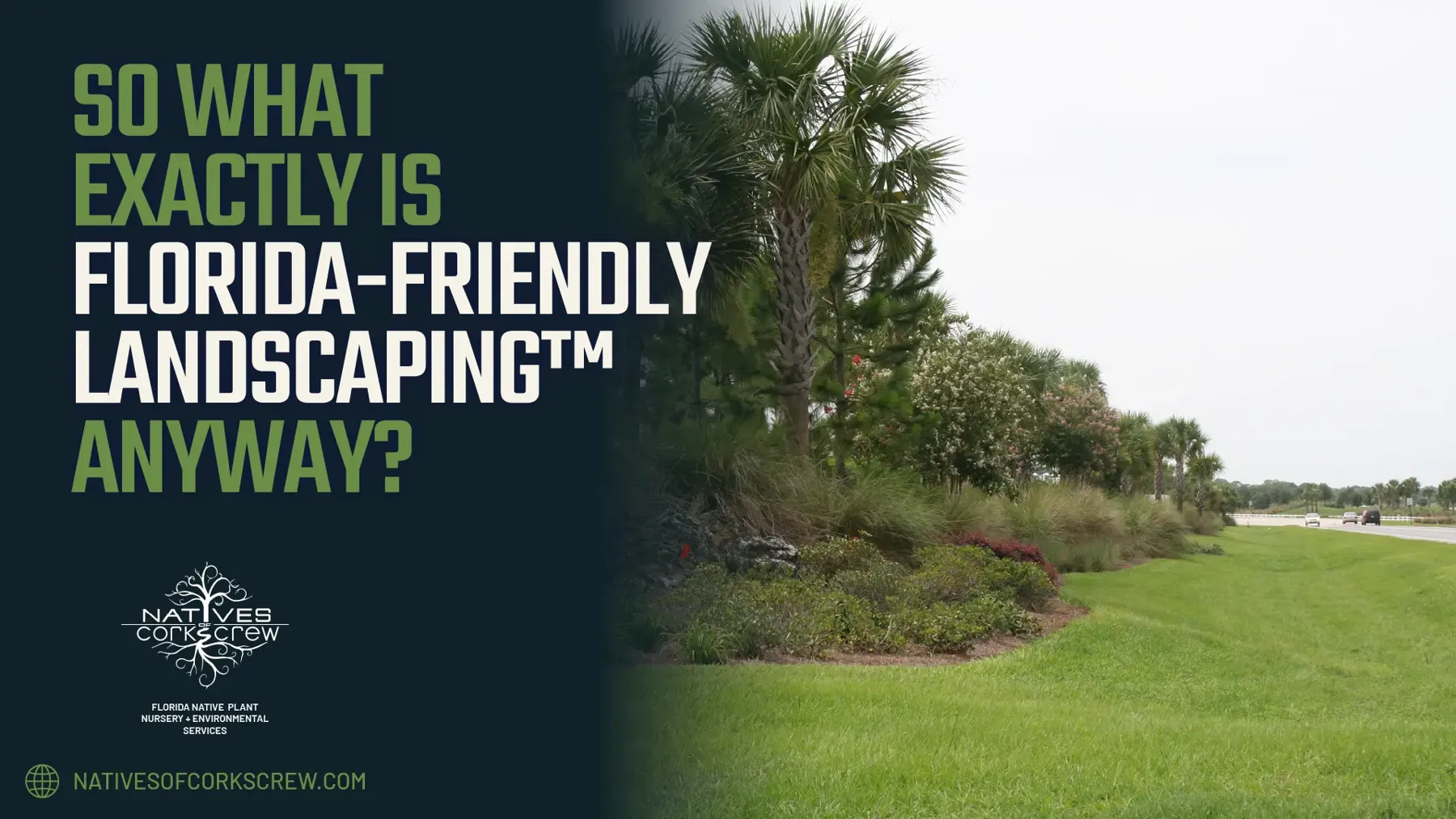
The landscape design approach matters as much as the plant list. A repeated drift of Muhly Grass or a clean mass of Coontie reads as intentional. That visual order is exactly what HOA boards look for in a well-maintained community.
Top Drought-Tolerant Native Plants
| Common Name | Plant Type | Mature Size (H x W) | Best HOA Landscape Application |
| Muhly Grass | Ornamental Grass | 3′ x 3′ | Mass plantings, borders, fall color (pink plumes) |
| Coontie | Cycad/Shrub | 3′ x 4′ | Low, structured evergreen borders near signs/walkways |
| Dune Sunflower | Groundcover | 2′ x 5′ | Fast-spreading seasonal color for open sandy areas |
| Silver Buttonwood | Large Shrub/Tree | 15′ x 15′ | Silver foliage contrast, highly salt and drought tolerant |
| Firebush | Large Shrub | 8′ x 8′ | Specimen or accent plant. Excellent for attracting pollinators. |
Note on Firebush: While Firebush is highly drought-tolerant and thrives in full sun, its open, spreading habit means it should be used as a standalone specimen or background accent, not forced into a neat, formal box shape.
Best Native Shrubs for Privacy Screening and Structure
Many common areas need screening: clubhouse borders, utility boxes, pool equipment, and road buffers all require plants with enough structure to define space.
A Crucial Clarification on Privacy Screens: Fast-growing plants like Firebush or Wild Coffee are sometimes mistakenly planted as privacy screens. However, Firebush has an open, leggy growth habit and drops leaves during winter cold snaps (below 40°F), leaving a bare, transparent hedge when you need privacy most.
Instead, rely on dense, evergreen native plants that naturally want to grow into thick screens.
Top Native Plants for Dense HOA Screening
| Common Name | Plant Type | Mature Size (H) | Screening Characteristics |
| Simpson’s Stopper | Large Shrub | 10′ – 20′ | Dense, evergreen foliage; neat appearance; attractive bark |
| Walter’s Viburnum | Shrub/Small Tree | 8′ – 15′ | Very dense; can be lightly sheared; blooms white in spring |
| Wax Myrtle | Large Shrub | 10′ – 20′ | Extremely fast grower; great for large background buffers |
| Florida Privet | Medium Shrub | 8′ – 12′ | Yellow-green foliage; takes well to shaping and hedging |
Top Native Plants for Florida Retention Ponds and Swales
Retention ponds and swales are massive opportunities for Florida-friendly landscaping. Many pond edges are maintained as turf right to the waterline, but turf struggles with erosion, mowing hazards, and fluctuating water levels.
The Florida Department of Environmental Protection notes that replacing turf with native vegetative buffers around stormwater ponds can reduce nitrogen and phosphorus runoff by 40% to 60%. Native shoreline plants stabilize soil, absorb nutrients, and slow runoff.
Best Plants for Ponds and Wet Areas
| Common Name | Plant Type | Preferred Zone | Benefits for SWFL Water Systems |
| Pickerelweed | Aquatic | Shallow water edge | Absorbs excess nutrients; vibrant purple blooms |
| Duck Potato | Aquatic | Shallow water edge | Excellent soil stabilization at the waterline |
| Fakahatchee Grass | Large Grass | Moist upper bank | Tolerates wet roots but survives dry winter months |
| Bald Cypress | Tree | Wet bank/Shallow | Deep root systems prevent massive bank erosion |
Best Native Plants for Shaded Areas in SWFL
Shaded common areas often become expensive because turf thins out under trees, irrigation keeps the area damp, and bare soil washes away during storms. Replacing weak turf with shade-tolerant native plants prevents erosion and repeated sod replacement costs.
Top Native Plants for Shade
| Common Name | Plant Type | Mature Size (H x W) | Landscape Value in Shade |
| Wild Coffee | Medium Shrub | 4′ – 8′ | Glossy, textured evergreen leaves; calm, leafy appearance |
| Beautyberry | Medium Shrub | 4′ – 8′ | Bright purple berries in fall; great for informal edges |
| Marlberry | Large Shrub | 10′ – 15′ | Excellent vertical structure under mature tree canopies |
Native Plant Maintenance: Establishment vs. Long-Term Care
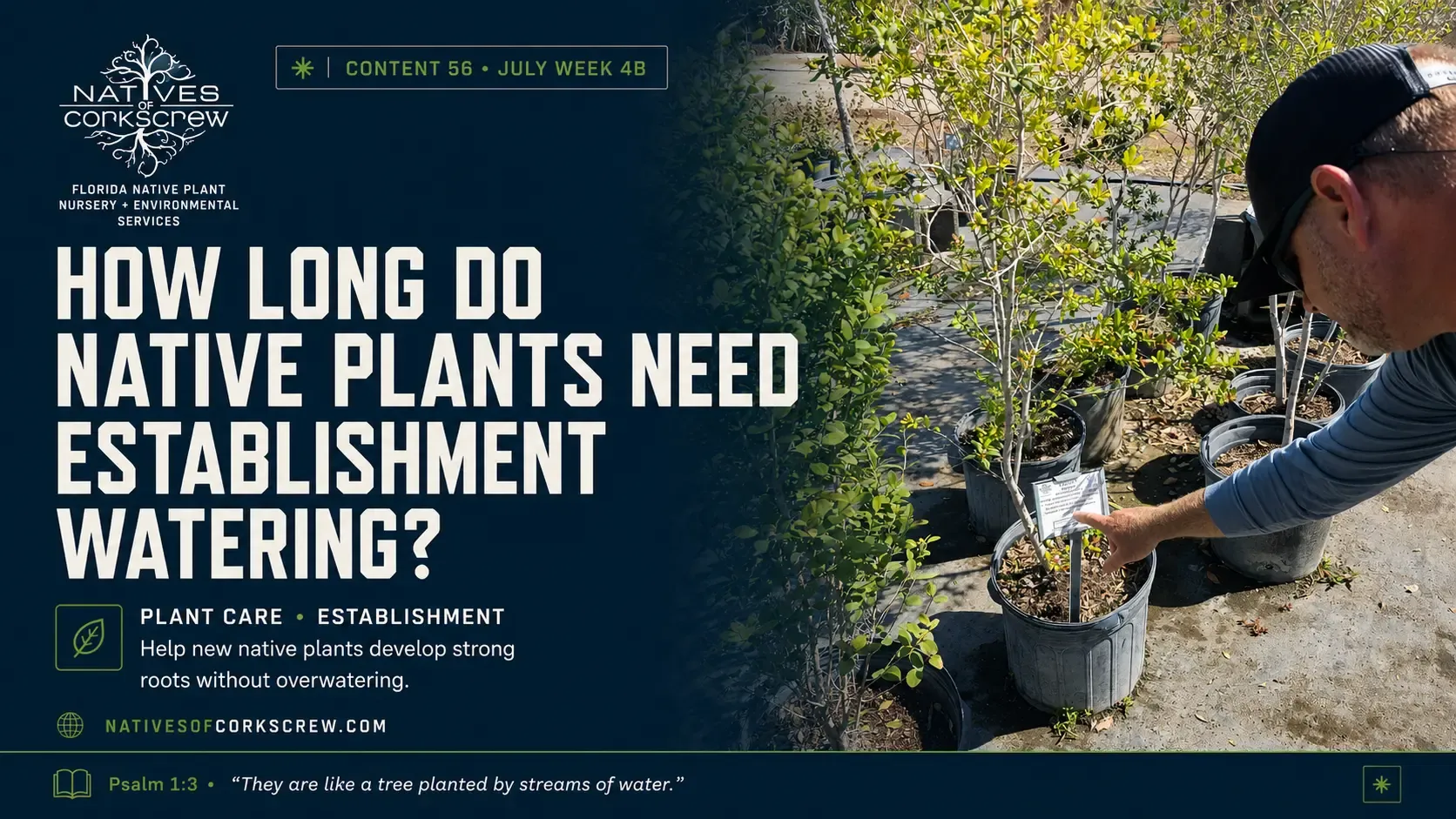
One common misconception is that native plants require zero care immediately after installation. Even well-adapted native Florida plants need an establishment period.
The Maintenance Timeline:
- Months 1–3 (Establishment): Regular, deep watering is required to establish root systems. Weeding is critical before plants fill in.
- Months 4–12 (Transition): Taper off irrigation. Plants are adapting. Monitor during extreme dry spells.
- Year 2 and Beyond (Established): Irrigation can often be turned off entirely except during severe droughts. Maintenance shifts to seasonal pruning (removing dead wood) rather than constant shearing.
Frequently Asked Questions (FAQs)
What is the best native plant for a privacy hedge in Southwest Florida?
Walter’s Viburnum and Simpson’s Stopper are two of the best native options for privacy hedges in SWFL. Both are evergreen, feature dense foliage, and can be shaped to look neat and intentional for HOA guidelines.
Do Florida native plants need an irrigation system?
Yes, but only temporarily. Native plants require regular irrigation for the first 3 to 6 months to establish their root systems. Once established, most native plants can survive on Florida’s natural rainfall and only need supplemental watering during severe droughts.
Why shouldn’t I use Firebush as a privacy screen?
While Firebush is a beautiful, drought-tolerant native plant that attracts pollinators, it has an open, leggy growth habit. Furthermore, it drops its leaves during cold snaps, meaning it will not provide a solid visual barrier year-round.
The Bottom Line for HOAs and Property Managers
Low-maintenance native landscaping is not about letting common areas go unmanaged; it is about reducing the need for constant correction. When native plants are selected by function—using Walter’s Viburnum for a screen instead of Firebush, or planting Fakahatchee grass on a pond bank instead of turf—they become easier to maintain.
By prioritizing the right native plant for the right condition, Southwest Florida HOAs can drastically lower landscape overhead while helping the neighborhood function beautifully within its local environment.